
Do patients really need strict rest after FET?
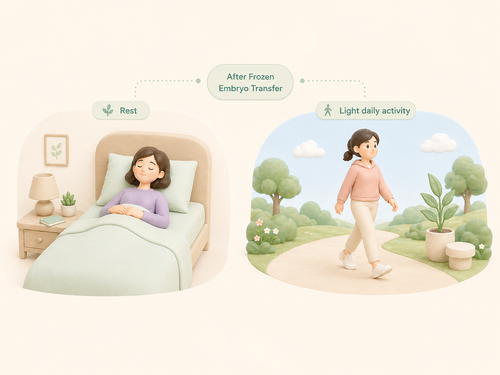
Advice to reduce activity after embryo transfer is still common in IVF care, even though the evidence behind it has never been especially robust.
A recent paper by Remy et al., published in Journal of Gynecology Obstetrics and Human Reproduction in 2026, took a closer look at this question in “Impact of physical activity on frozen embryo transfer outcomes.” The study explored whether physical activity after frozen embryo transfer was associated with treatment outcomes.
The authors reported that physical activity after FET did not negatively influence success, and concluded that there is no evidence to recommend restricting activity after transfer. In other words, routine movement in daily life did not appear to compromise FET outcomes. The study also noted that 212 patients fully completed the post-transfer questionnaire, which adds to the practical, patient-centered nature of the analysis.
What makes this paper especially relevant is how directly it relates to a common patient concern. The post-transfer period is often one of the most anxious phases of treatment, and advice that is not clearly evidence-based can easily add more stress than reassurance. This study therefore raises an important question for clinics: whether strict rest recommendations are truly helpful, or whether more realistic guidance may be both more accurate and more supportive.
For IVF teams, that makes this paper more than a lifestyle note. It is a useful reminder that even routine post-transfer advice deserves periodic re-examination, especially when it can shape patient expectations and behavior during such a sensitive stage of treatment.