
5 digital/AI tools IVF professionals may find useful
When people talk about digital tools in fertility care, the conversation often goes straight to embryo assessment or clinical AI. But in everyday IVF work, some of the most useful tools are much quieter. They help teams keep up with new evidence, prepare for patient discussions, standardize internal processes, and save time on tasks that are important but repetitive. For embryologists and clinicians alike, the value is often not in replacing expertise, but in reducing friction around research, communication, and workflow.
1. International IVF Initiative
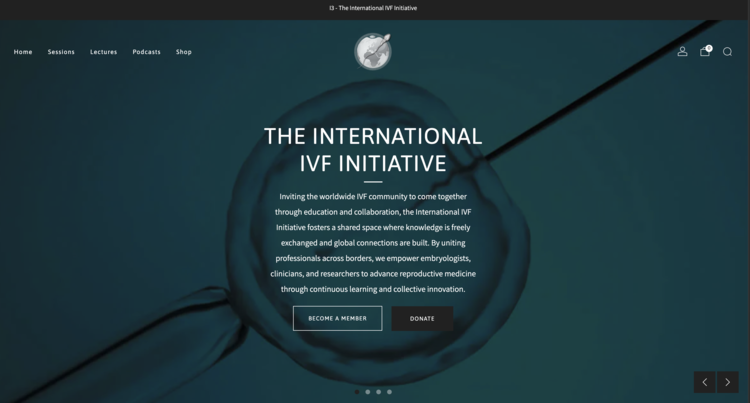
One useful resource is the International IVF Initiative. As a global non-profit educational platform, it offers free webinars, lectures, and expert discussions across a wide range of ART topics. For embryologists, that may mean dipping into a session on lab quality, cryopreservation, or emerging technologies. For clinicians, it may be a practical way to stay current on new themes in reproductive medicine without waiting for the next major congress.
2. Remembryo
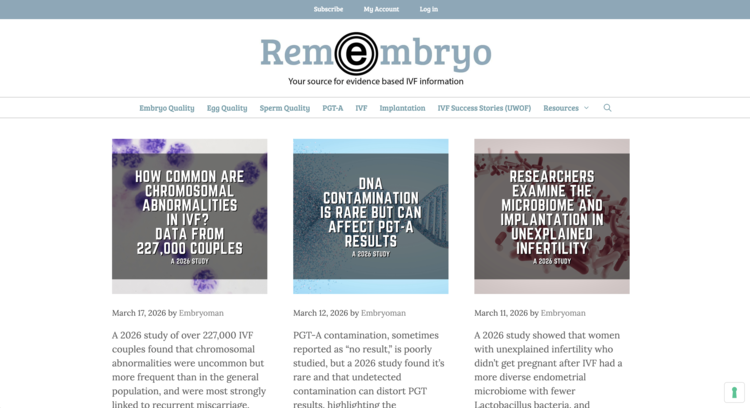
Remembryo is another resource that feels especially relevant to IVF teams because it is built around IVF research itself. Created by a former embryologist, the site translates new studies into more accessible summaries and organizes topics such as embryo quality, egg quality, implantation, and PGT-A. In practice, that could mean using it to quickly orient yourself before a journal club, to get a concise refresher before counseling a patient, or simply to scan what new research is saying before deciding which papers deserve a full read.
3. SART Predictor
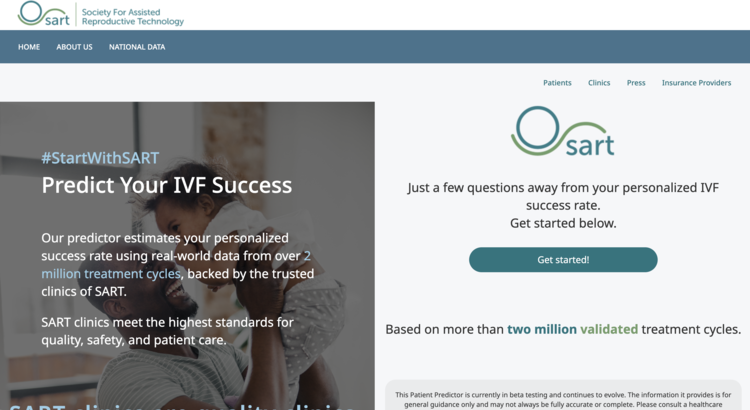
The SART Predictor is useful in a different way. Rather than helping with literature review, it supports expectation-setting in clinical conversations by estimating personalized IVF success rates from real-world data based on more than 2 million treatment cycles. It is not a substitute for clinical judgment, but it can be a useful starting point when discussing prognosis, cycle planning, or next-step conversations with patients who want a clearer evidence-based frame.
4. scite
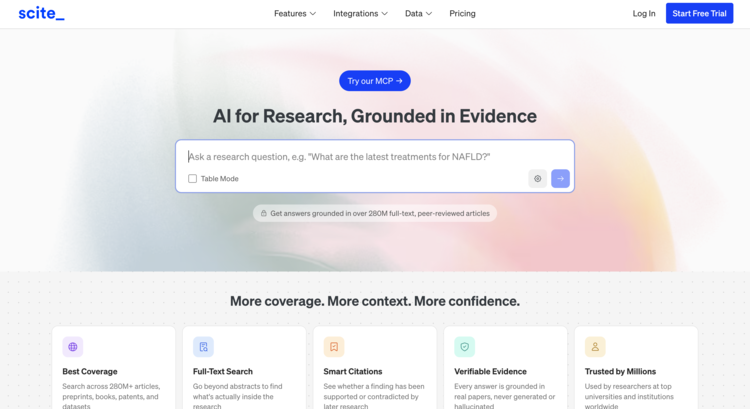
For evidence appraisal, scite is particularly helpful. Instead of relying on citation counts alone, it shows whether later papers supported, contrasted, or simply mentioned a study. That can be especially useful in IVF, where certain claims can become widely repeated before teams have time to fully examine how well they hold up. An embryologist reviewing a new embryo selection paper, or a clinician reading about stimulation or transfer protocols, may find this a faster way to stress-test a paper before bringing it into discussion.
5. OpenEvidence
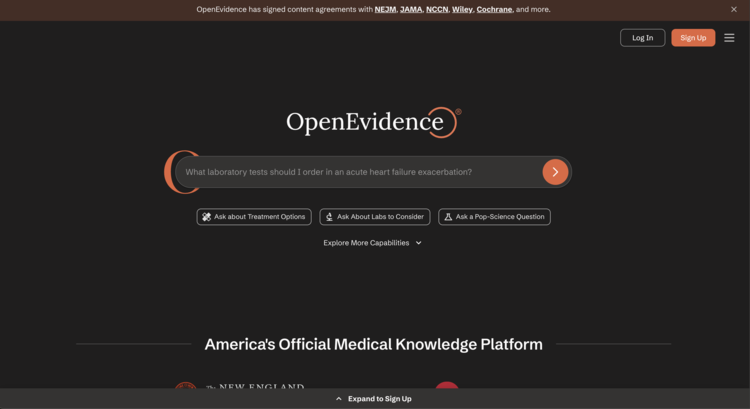
OpenEvidence is more useful when the goal is to get to a clinically relevant answer quickly, rather than to build a full research workflow. It is designed as an evidence-based medical search platform for clinicians, with a stronger point-of-care feel than literature review tools. For IVF teams, this could be useful when checking a focused clinical question or preparing for patient counseling on topics such as ovarian stimulation, embryo transfer timing, or luteal support without starting every search from zero.
Used thoughtfully, these tools can make everyday IVF work a little easier, from staying current on the literature to supporting clearer communication and more efficient workflows.