
Government Recognizes Top 10 Achievements of the Pan-ministerial Full-Cycle Medical Device R&D Program
Performance report meeting held on Feb 11 to share key results
Highlights include the world’s first smart contact lens for intraocular pressure monitoring and an AI solution that predicts embryo development and pregnancy likelihood
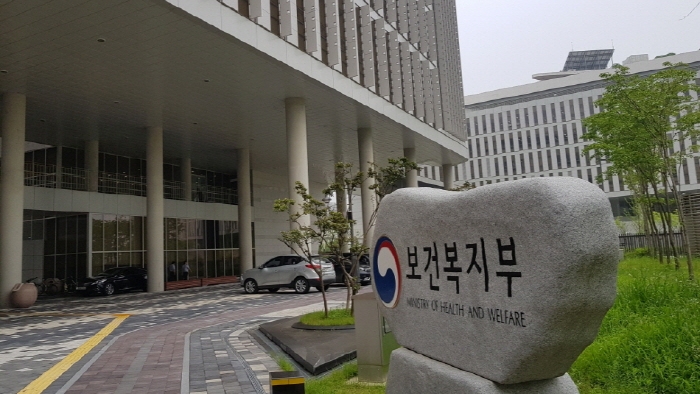
A performance report meeting for the “2025 Top 10 Representative Projects” of Korea’s pan-ministerial full-cycle medical device R&D program was held at 10:00 a.m. on Feb 11 at the YTN News Square Media Hall in Mapo-gu, Seoul. The program is jointly supported by four ministries: the Ministry of Health and Welfare, the Ministry of Science and ICT, the Ministry of Trade, Industry and Energy, and the Ministry of Food and Drug Safety.
The pan-ministerial full-cycle medical device R&D program is a large-scale initiative designed to support the entire lifecycle of medical devices—from technology development to clinical studies, regulatory approval, and commercialization. The program invested a total of KRW 1.2 trillion over six years (2020–2025) and provided national funding of KRW 987.6 billion across 437 projects.
Now in its third year, the performance report meeting was organized to recognize projects that delivered outstanding outcomes through the program and to share major results. The event aimed to boost morale among medical device researchers and industry stakeholders, while also increasing public understanding and interest.
This year’s Top 10 Representative Projects were selected by comprehensively evaluating submissions from 46 companies, based on three core indicators: (1) appropriateness of R&D execution, (2) impact in the technology and medical fields, and (3) impact in social and economic fields, along with overall innovation and potential for further results.
The ten selected companies were IMGT, JPI Healthcare, TAU Medical, Noul, Seers Technology, Resens Medical, Neunaps, Emocog, Hwabiomed, and Kai Health.
Notable examples included development of the world’s first smart contact lens capable of monitoring intraocular pressure, as well as development of an AI solution that predicts embryo development status and pregnancy likelihood to help address infertility and Korea’s low birth rate.
The program office also plans to set up a promotional booth for the Top 10 Representative Projects at KIMES 2025 (the 40th International Medical Equipment & Hospital Facilities Show), held March 20–23. Posters and equipment will be exhibited, and medical device stakeholders will be given opportunities to view demonstrations.
The government expressed expectations that, as last year’s selected projects produced strong outcomes—for example, a domestically developed hemodialysis medical device being successfully used for patient treatment—this year’s Top 10 projects will likewise accelerate localization of medical devices, support global market entry, and contribute to improving patients’ quality of life.
Kim Beop-min, head of the program office, said that the selected projects are innovative medical devices developed through close cooperation between ministries and the program office, with the goal of solving social challenges and leading global markets.
The Ministry of Health and Welfare stated that medical devices are not merely products but are critical elements directly tied to people’s health and lives, and that their advancement has a significant impact on quality of life. The ministry added that it will continue strengthening support so that government R&D investment not only drives industry growth but also leads to outcomes the public can directly experience.
Source: Medipana News · By Jeong-su Lee (leejs@medipana.com) · Published Feb 11, 2025 · Originally published in Korean · English translation