
Kai Health Seeks Infertility “Insights” in a Sea of Data
As the average age at first marriage rises and childbearing ages continue to climb, the number of infertility patients in Korea has been increasing every year. For women aged 35 and older who wish to conceive, it is important to begin proactive infertility treatment at the right time.
With infertility treatment, repeated failures mean more time passes—patients get older, ovarian function declines, and the chance of obtaining high-quality eggs decreases, which in turn lowers the likelihood of pregnancy. For that reason, patients need a range of treatment options.
Recently, D.CAMP (the Banks Foundation for Young Entrepreneurs) and Seoul National University College of Medicine co-hosted a startup competition. Early-stage teams—each including at least one current student (undergraduate or graduate), researcher, or alumnus of SNU College of Medicine—presented their business models. Kai Health, which won the competition, is already drawing industry attention as a promising player in Korea’s infertility AI solutions space.
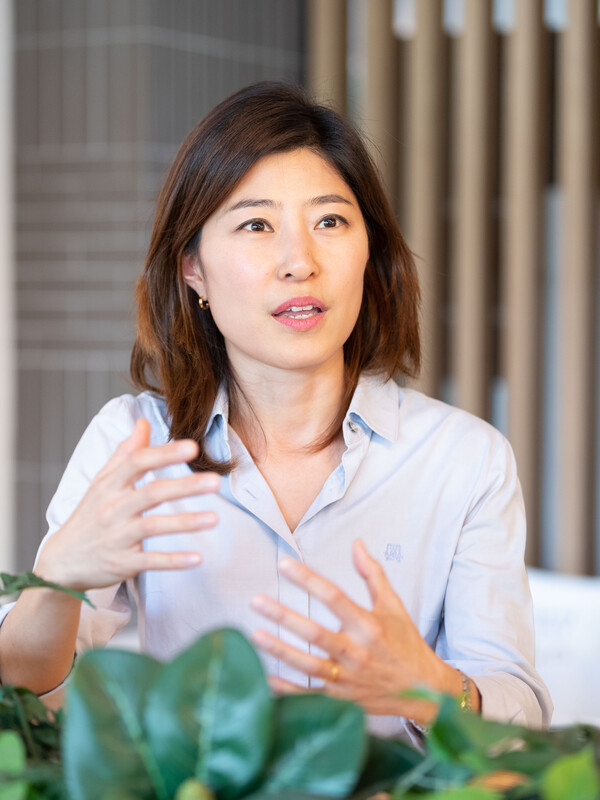
Hyejun Lee, CEO of Kai Health (photo), told this publication, “A fundamental part of succeeding in IVF is selecting good embryos. Our approach is based on a trained algorithm that uses AI to help select embryos with higher potential based on data,” adding that the company is “exploring multiple ways to raise pregnancy success rates by making what has been done through experience more objective.”
The company is currently focused on advancing its model, with a full launch targeted for the second half of the year. The ultimate goal is to derive data that can demonstrate improvements in egg quality. In addition, the company aims to help patients make better choices by presenting indicators and statistics that people often look at when selecting a hospital.
CEO Lee, who previously worked as an OB-GYN specialist at institutions including Maria Hospital, said, “When treatment fails, it’s not only the patient who feels devastated—doctors feel it too. I hoped we could reach a point where we can clearly suggest what to do next,” adding, “I want to provide systematic technology that can reduce the financial burden of repeated procedures, help with issues such as depression, and support patients in planning their lives going forward.”
Looking ahead, she said the company’s ambition goes beyond infertility procedures to also present, in a data-driven way, a range of factors that affect having a healthy baby—such as diet, exercise, psychological state, and stress management.
Meanwhile, bio-healthcare projects have increasingly taken the form of multi-institution collaborative research. As a result, shared research platforms that use the cloud to conduct medical research more safely and efficiently are becoming the prevailing approach, with AWS’s AI/ML solutions often cited as a leading example.
Aiming to Build a Solution That Supports the Whole Family Through Information Sharing, Beyond Infertility
Kai Health is also actively using such solutions in developing medical AI intended to address infertility. The company is implementing its AI for clinicians through the cloud, expecting it to be useful not only for improving convenience for clinicians and researchers but also as a platform that can eventually deliver value to patients who need it.
Taehoon Ko, a research assistant professor at Seoul St. Mary’s Hospital’s Smart Hospital Intelligent Medical Data Center, who serves as an advisor to Kai Health, added, “There is strong interest in the low birth rate issue and many people are suffering, so it’s a very compelling topic, and it’s developing in a good direction,” noting that he “deeply relates to it as a technology that is needed both for patients currently undergoing treatment and in the future.”
Concluding the interview, CEO Lee emphasized, “In Kai Health, ‘Kai’ means ‘sea,’ reflecting our intent to find meaningful insights in a sea of data,” and reiterated, “We don’t want to stop at infertility. We want to create a space for sharing information and communication, and ultimately grow into a solution that supports the entire family.”
Source: The Korea Medical News (Euihaksinmun) / Daily Bosa · By In-gyu Oh · Originally published in Korean · English translation