
Three Months After New Health Technology Notice, Kai Health’s Embryo Analysis AI Adopted by 20 Fertility Clinics
Kai Health, led by CEO Hyejun Lee, announced on February 12 that it has signed adoption agreements with more than 20 fertility clinics in Korea for Vita Embryo, its AI software for embryo analysis. According to the company, this milestone was reached in about three months after the Ministry of Health and Welfare’s notice in November last year designating the technology under the deferred-assessment pathway for new health technologies.
Vita Embryo is a clinical decision support software that uses deep learning to analyze Day 5 embryo images captured during in vitro fertilization (IVF). It provides a score indicating the likelihood of fetal heartbeat development and supports clinicians in determining embryo transfer priority.
In 2024, Kai Health conducted confirmatory clinical trials at Seoul National University Bundang Hospital and Joeun Munhwa Hospital, and in 2025, it received Class III medical device approval from Korea’s Ministry of Food and Drug Safety. It was later designated by the National Evidence-based Healthcare Collaborating Agency (NECA) as a new health technology under deferred assessment, followed by an official notice from the Ministry of Health and Welfare, establishing the institutional basis for its use in clinical practice.
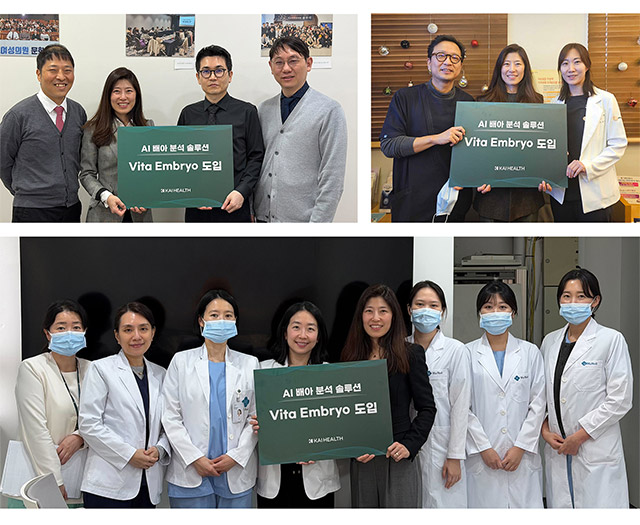
According to the company, key adopting institutions include Ciel Hospital, MizMedi Hospital, Joeun Munhwa Hospital, Mirae wa Huimang OB-GYN Clinic, Seoul Women’s Hospital, and Best of Me Women’s Clinic.
A representative from one adopting hospital said, “As clinicians’ experience plays an important role in embryo evaluation and in decisions regarding transfer and cryopreservation, there has been a continued need for objective indicators that can be referenced in practice. We expect Vita Embryo to help improve consistency in assessing embryo developmental status and serve as a supportive tool for clinicians’ decision-making.”
Hyejun Lee, CEO of Kai Health, said, “It is very meaningful that many fertility centers decided to adopt the technology within a short period following the government notice. We will further strengthen our support to ensure stable implementation at each clinic and continue to advance the product based on evidence accumulated in clinical settings, so that it can provide practical value to both clinicians and patients.”
Source: Digital Chosun Ilbo (dizzo.com) · By Jung-a Kim · Originally published in Korean