
“So You Don’t Have to Go Through Fertility Treatment Two or Three Times”… Kai Health Looks to the Cloud for the Key

“Fertility treatment costs more than 3 million won per cycle in Korea, and about 20,000 dollars (around 25 million won) per cycle in the U.S., but the success rate is only about 30%. If it fails once, you have no choice but to wait for the second and third try—and not knowing ‘what will happen next’ makes it an incredibly tough procedure.”
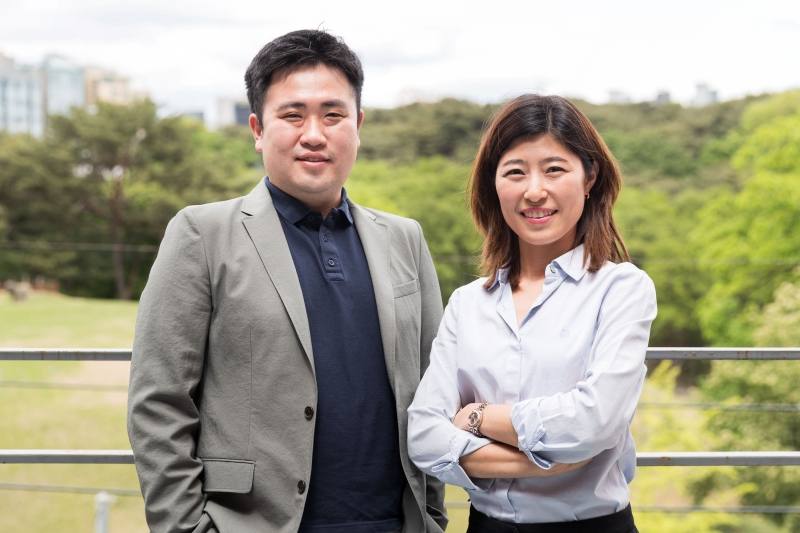
Hyejun Lee, CEO of Kai Health, shared these remarks in a meeting with Bloter on the 29th of last month, explaining why she founded the company. Kai Health is a startup building an “AI solution for infertility” designed to help select the best embryos and improve pregnancy rates. The company recently won a startup competition co-hosted by D.CAMP (Banks Foundation for Young Entrepreneurs) and Seoul National University College of Medicine. Kai Health is currently based at D.CAMP and is developing a clinician-facing app with a launch targeted for the second half of the year.
In clinical practice, embryos are commonly categorized into high-, medium-, and low-grade groups based on factors such as cell-division speed and morphology, because implantation rates differ. IVF using the highest-grade embryos is often considered the final option in infertility treatment. Kai Health’s core value proposition is that pregnancy success rates can be improved by using AI algorithms—rather than the human eye—to support the key process of selecting which embryos to transfer. The company plans to generate revenue by supplying this decision-support system to hospitals and clinics through a B2B (business-to-business) model.
Lee emphasized, “What most affects pregnancy rates is embryo quality,” adding, “If embryologists’ assessments based on microscopy are accurate about 50% of the time, AI can raise that to about 60–70%.”
She continued, “Both humans and AI can see the part that becomes the baby equally well, but AI reads subtle ‘patterns’ that the eye can’t catch. When we consult with lab directors who have 15 to 20+ years of experience, even they say things like, ‘I don’t think I would’ve gotten that right.’ Judgments made based on AI and data tend to produce better results on average.”
The AI model Kai Health uses to generate its results was built in the cloud on Amazon Web Services (AWS). The company set up a deep learning development environment using Amazon SageMaker, a machine learning service. Professor Taehoon Ko of Seoul St. Mary’s Hospital, who advises Kai Health, had prior experience using the cloud during his graduate research, which helped the company adopt it quickly.
Ko said, “The biggest advantage of AWS is the flexibility—you can elastically scale computing power as needed,” and added, “There are also many convenience features for users, and combining them makes it possible to create new value.”
Is there concern about a company handling sensitive data using a public cloud? Public cloud services deliver IT services through servers on the internet. Lee said, “Because you can set up everything solidly—from backups to legal counsel—healthcare companies, including us, are continuing to move to the cloud,” expressing confidence in AWS security.
Many companies—including Kai Health—are working to bring AI into healthcare, but success is not guaranteed. A representative example is IBM Watson. IBM’s Watson business was sold in January to the private equity firm Francisco Partners. IBM claimed Watson could improve clinical capability, but in practice it often failed to align with clinicians’ judgments—suggesting it did not reach a level of “explainable AI.”
In response, Lee said, “We don’t think AI can make every complex, multifactor decision for everyone. Our goal is to identify where AI sees images better than humans do,” adding, “Infertility treatment is expensive and often not covered by insurance worldwide, and patients are not coming in because they’re ‘sick,’ so it’s a bit different from disease-focused markets.”
Kai Health plans to expand beyond infertility treatment into data-driven “infertility care,” including guidance spanning diet and exercise habits. Lee said, “After building the embryo-evaluation solution, we’ll develop an egg-analysis solution and build a care program that matches egg quality with lifestyle,” adding, “If we collect data well, we can provide patients with evidence for the advice we give.”
As healthcare solutions evolve, health data accumulated by hospitals is becoming a key driver. However, for institutions such as hospitals to use medical data internally or externally, they must form a data review committee under Ministry of Health and Welfare guidelines and receive approval on whether data export and linkage are appropriate. While collaborative research is increasing in healthcare, the burden can be heavy for smaller institutions.
Ko argued that by combining AWS capabilities, it is possible to create an environment on a public cloud where external researchers can collaborate without taking data out of the system. He said, “Data analysis rooms created by the National Health Insurance Service or HIRA have no internet access and are designed solely for analyzing data,” and emphasized, “The key is that you can implement that same kind of closed analysis room on a public cloud.”
Ko explained that if the traditional medical-research cycle required a complex preparation process—“secure budget → acquire infrastructure → prepare data → configure computing → install research software → conduct research”—cloud-based research can be compressed to “secure budget → connect data → choose tools → run → conduct research.”
Kai Health is also participating as a partner in the National Information Society Agency (NIA) project to build an AI dataset of embryo images. The company expects this will help further advance its AI model for infertility treatment.
Lee said, “There is the domestic market, but Europe and the U.S. are very promising,” adding, “Because treatment is so expensive, it’s financially difficult for patients to do multiple cycles—so doing it successfully in one try becomes incredibly important. To meet that need, we’re moving quickly toward global expansion.”
Lee is a physician-turned-entrepreneur who previously trained and worked as a resident and fellow in obstetrics and gynecology at Seoul National University Hospital, and served as a department director and head of the International Clinic at Maria Hospital. She worked in strategy and AI at Change Healthcare, and later led APAC business development at precision-medicine platform company Syapse.
Professor Ko, an advisor to Kai Health, is considered a health-data expert. His roles include research assistant professor at the Department of Medical Informatics, Catholic University College of Medicine and Seoul St. Mary’s Hospital’s Smart Hospital Intelligent Medical Data Center, as well as board member of the Korean Society of Medical Informatics, committee member of the Korean Society for Health Information and Statistics, and a data-review expert committee member for the Korea Health Information Service.
Source: Bloter · Originally published in Korean · English translation